LED Hotel Door Signs Installation Requirements for Hotels
LED hotel door signs installation requirements: low-voltage wiring, power supply, battery replacement, and electrical code compliance for hotel properties.
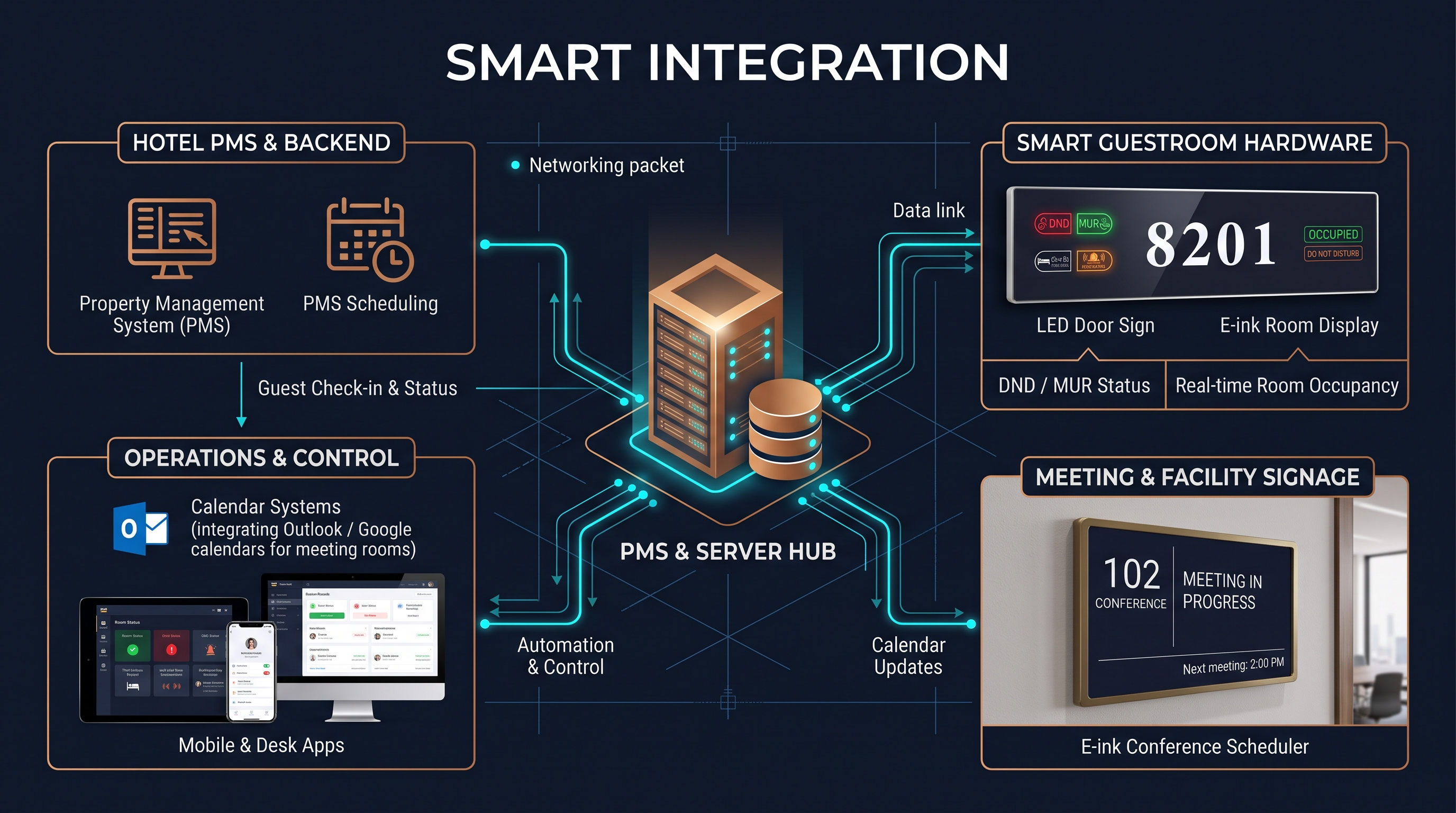
LED hotel door signs installation requirements is the most operationally complex specification resource a hotel procurement team uses when specifying illuminated door identification systems. LED hotel door signs deliver a high-visibility, all-hours illuminated presentation that supports the brand positioning and the guest experience, but the LED hotel door signs installation requirements must account for the low-voltage wiring, the power supply, the battery replacement, the electrical code compliance, and the maintenance protocol to arrive at a specification that meets the operational needs and the budget constraints. The LED hotel door signs installation requirements guide provides a structured decision matrix that procurement teams can use to specify the optimal installation approach for the property electrical infrastructure, the maintenance labor availability, and the long-term operational cost.
LED hotel door signs are the most visibility-effective specification for hotel properties that require illuminated door identification, with the LED illumination providing active visibility that is perceivable from the corridor at distances of 10 to 20 meters. The LED hotel door signs are typically manufactured with internal LED panels, low-voltage power supplies, battery or hard-wired power options, and diffuser layers that provide even illumination across the sign face. The LED hotel door signs installation requirements vary significantly based on the power option, with the hard-wired installation requiring dedicated low-voltage wiring and the battery-powered installation requiring periodic battery replacement. The LED hotel door signs installation requirements guide helps procurement teams specify the optimal power option for the property infrastructure and the maintenance labor availability.
The LED hotel door signs installation requirements are a critical input to the property electrical planning and the architectural coordination, because the LED installation requires either the low-voltage wiring infrastructure for the hard-wired option or the battery replacement access for the battery-powered option. The LED hotel door signs installation requirements guide recommends that procurement teams coordinate the LED specification with the electrical contractor and the architectural team from the design development phase, because retrofitting the LED installation to the existing property infrastructure is a common source of cost overruns and installation delays. The LED hotel door signs installation requirements guide treats the electrical planning and the architectural coordination as the primary specification axes, with the cost and the maintenance scope as the secondary specification axes.
Why LED Hotel Door Signs Installation Requirements Are Critical
LED hotel door signs installation requirements are critical because the LED illumination system requires a coordinated specification across the electrical, the architectural, the mechanical, and the maintenance dimensions that no other door sign material requires. The LED hotel door signs installation requirements analysis must account for the property electrical capacity, the property infrastructure availability, the installation labor scope, the maintenance labor scope, the regulatory compliance scope, and the long-term operational cost to arrive at a specification that meets the operational needs and the budget constraints. The LED hotel door signs installation requirements guide is therefore as much an electrical planning exercise as it is a procurement exercise.
The LED hotel door signs installation requirements analysis is also a critical input to the property financial planning and the capex budget allocation, because the LED installation can add 50 to 200 percent to the per-room unit cost depending on the power option, the installation scope, and the maintenance scope. The procurement team that understands the cost impact of the LED installation options is better positioned to defend the LED specification against cost-reduction pressure from the property finance team. The LED hotel door signs installation requirements guide must therefore include a structured cost analysis that quantifies the upfront cost, the installation cost, the maintenance cost, and the long-term operational cost.
The LED hotel door signs installation requirements analysis must also account for the regulatory compliance scope, because the LED installation typically requires compliance with the electrical code, the fire code, the building code, and the energy efficiency standards. The procurement team that understands the regulatory compliance scope is better positioned to specify the LED installation that meets the regulatory requirements without overspecifying on dimensions, materials, or installation methods. The LED hotel door signs installation requirements guide treats the regulatory compliance as a baseline specification rather than a premium specification, because the regulatory compliance is mandatory for any LED installation in a commercial hospitality property.
LED Hotel Door Signs Power Option Selection
LED hotel door signs power option selection is the primary specification axis of the LED hotel door signs installation requirements analysis, and the power option drives the per-room cost, the installation labor, and the maintenance scope. The LED hotel door signs installation requirements guide typically presents three power options that align with the property infrastructure and the maintenance labor availability. The first power option is the hard-wired low-voltage power option, which is the baseline specification for new construction and for properties with existing low-voltage infrastructure. The second power option is the battery-powered option, which is the specification for renovation projects where the new wiring is impractical. The third power option is the Power over Ethernet (PoE) option, which is the specification for properties with existing Ethernet infrastructure and for properties that require remote management capability.
The hard-wired low-voltage power option for LED hotel door signs typically uses 12V DC or 24V DC power supplied by a centralized power supply that is installed in the electrical room. The hard-wired option requires dedicated low-voltage wiring from the electrical room to each door sign location, which adds 2 to 4 days of electrical labor per 100 rooms to the installation scope. The LED hotel door signs installation requirements guide treats the hard-wired option as the most reliable and the lowest maintenance option, with the upfront cost premium offset by the avoided battery replacement labor.
The battery-powered option for LED hotel door signs typically uses 6V DC or 12V DC battery power that is replaced on a scheduled maintenance cycle. The battery-powered option requires no electrical infrastructure at the door sign location, which reduces the installation labor to 10 to 30 minutes per sign for the surface mount. The LED hotel door signs installation requirements guide treats the battery-powered option as the most flexible option, with the battery replacement labor offsetting the avoided wiring labor over the service life.
The Power over Ethernet (PoE) option for LED hotel door signs typically uses the property Ethernet infrastructure to deliver both the power and the data connectivity to the door sign. The PoE option requires the Ethernet infrastructure to be available at each door sign location, which may require additional Ethernet cabling for new construction. The LED hotel door signs installation requirements guide treats the PoE option as the most flexible and the most capable option, with the remote management capability providing additional value beyond the basic LED illumination.
LED Hotel Door Signs Low-Voltage Wiring Specification
LED hotel door signs low-voltage wiring specification is the second major specification axis of the LED hotel door signs installation requirements analysis, and the wiring specification drives the installation cost, the reliability, and the regulatory compliance. The LED hotel door signs installation requirements guide typically presents three wiring specifications that align with the property infrastructure and the regulatory compliance scope. The first wiring specification is the standard low-voltage wiring, which is the baseline specification for new construction and for properties with existing low-voltage infrastructure. The second wiring specification is the plenum-rated wiring, which is the specification for properties with plenum ceiling spaces. The third wiring specification is the conduit-protected wiring, which is the specification for properties with exposed wiring requirements.
The standard low-voltage wiring for LED hotel door signs typically uses 18 AWG or 20 AWG two-conductor wire that is routed through the ceiling cavity or the wall cavity to the door sign location. The standard wiring is the most cost-effective option, with a typical installation cost of $3 to $8 per sign for the wiring labor. The LED hotel door signs installation requirements guide treats the standard wiring as the baseline specification and applies cost multipliers for the plenum-rated and conduit-protected wiring.
The plenum-rated low-voltage wiring for LED hotel door signs typically uses CMP-rated cable that is approved for installation in plenum ceiling spaces. The plenum-rated wiring is required by the building code for properties with plenum ceiling spaces, with a typical installation cost of $5 to $15 per sign for the wiring labor. The LED hotel door signs installation requirements guide treats the plenum-rated wiring as the specification for properties with plenum ceiling spaces, with the cost premium quantified and the regulatory compliance integrated into the specification.
The conduit-protected low-voltage wiring for LED hotel door signs typically uses EMT conduit or flexible metal conduit that protects the low-voltage wiring from physical damage. The conduit-protected wiring is required by the building code for properties with exposed wiring requirements, with a typical installation cost of $10 to $25 per sign for the wiring labor. The LED hotel door signs installation requirements guide treats the conduit-protected wiring as the specification for properties with exposed wiring requirements, with the cost premium quantified and the regulatory compliance integrated into the specification.
LED Hotel Door Signs Power Supply Specification
LED hotel door signs power supply specification is the third major specification axis of the LED hotel door signs installation requirements analysis, and the power supply specification drives the reliability, the maintenance scope, and the long-term operational cost. The LED hotel door signs installation requirements guide typically presents three power supply specifications that align with the property electrical capacity and the maintenance labor availability. The first power supply specification is the standard linear power supply, which is the baseline specification for most properties. The second power supply specification is the switching power supply, which is the specification for properties that require higher energy efficiency. The third power supply specification is the UPS-backed power supply, which is the specification for properties that require continuous illumination during power outages.
The standard linear power supply for LED hotel door signs typically uses a 12V DC or 24V DC linear regulator that converts the AC mains to the DC voltage required by the LED panel. The standard power supply has a typical efficiency of 60 to 70 percent, with a typical service life of 5 to 10 years in indoor hotel environments. The LED hotel door signs installation requirements guide treats the standard power supply as the baseline specification and applies cost multipliers for the switching and UPS-backed power supplies.
The switching power supply for LED hotel door signs typically uses a 12V DC or 24V DC switching regulator that converts the AC mains to the DC voltage with higher efficiency than the linear power supply. The switching power supply has a typical efficiency of 85 to 95 percent, with a typical service life of 7 to 12 years in indoor hotel environments. The LED hotel door signs installation requirements guide treats the switching power supply as the recommended specification for properties that require higher energy efficiency, with the cost premium quantified and the energy savings integrated into the lifecycle cost analysis.
The UPS-backed power supply for LED hotel door signs typically uses a UPS unit that provides battery backup for the LED illumination during power outages. The UPS-backed power supply is required by the fire code for emergency egress signage and is recommended for properties that require continuous illumination during power outages. The LED hotel door signs installation requirements guide treats the UPS-backed power supply as the specification for properties with continuous illumination requirements, with the cost premium quantified and the regulatory compliance integrated into the specification.
LED Hotel Door Signs Battery Replacement Protocol
LED hotel door signs battery replacement protocol is the fourth major specification axis of the LED hotel door signs installation requirements analysis, and the battery replacement protocol drives the maintenance cost and the long-term operational cost. The LED hotel door signs installation requirements guide typically presents three battery replacement protocols that align with the maintenance labor availability and the property operational requirements. The first battery replacement protocol is the scheduled battery replacement, which is the baseline specification for most properties. The second battery replacement protocol is the battery monitoring protocol, which is the specification for properties that require predictive battery replacement. The third battery replacement protocol is the battery-free protocol, which is the specification for properties that require no battery maintenance.
The scheduled battery replacement protocol for LED hotel door signs typically replaces the batteries on a 12 to 24 month cycle, with the maintenance labor typically sourced from the housekeeping or maintenance team. The scheduled battery replacement cost is typically $2 to $5 per sign per replacement cycle, with the total annual maintenance cost typically $1 to $2.50 per sign. The LED hotel door signs installation requirements guide treats the scheduled battery replacement as the baseline specification and applies cost multipliers for the battery monitoring and battery-free protocols.
The battery monitoring protocol for LED hotel door signs typically uses a remote monitoring system that tracks the battery voltage and the LED performance to predict the optimal battery replacement timing. The battery monitoring protocol requires the property to have a network infrastructure or a wireless communication system that supports the monitoring data collection. The LED hotel door signs installation requirements guide treats the battery monitoring protocol as the specification for properties that require predictive battery replacement, with the cost premium quantified and the avoided battery waste integrated into the lifecycle cost analysis.
The battery-free protocol for LED hotel door signs typically uses the hard-wired or PoE power option to eliminate the battery maintenance entirely. The battery-free protocol requires the property to have the electrical or PoE infrastructure available at each door sign location, with the cost of the infrastructure offsetting the avoided battery maintenance labor. The LED hotel door signs installation requirements guide treats the battery-free protocol as the specification for properties that require no battery maintenance, with the cost premium quantified and the long-term operational savings integrated into the lifecycle cost analysis.
LED Hotel Door Signs Electrical Code Compliance
LED hotel door signs electrical code compliance is the fifth major specification axis of the LED hotel door signs installation requirements analysis, and the electrical code compliance drives the installation scope, the regulatory risk, and the operational reliability. The LED hotel door signs installation requirements guide typically presents three electrical code compliance scopes that align with the property location and the regulatory environment. The first electrical code compliance scope is the standard compliance, which is the baseline specification for properties in jurisdictions with standard electrical codes. The second electrical code compliance scope is the international compliance, which is the specification for properties with international brand standards. The third electrical code compliance scope is the hazardous location compliance, which is the specification for properties with hazardous location requirements.
The standard electrical code compliance for LED hotel door signs typically requires compliance with the National Electrical Code (NEC) in the United States, the Canadian Electrical Code (CEC) in Canada, or the equivalent national electrical code in other jurisdictions. The standard compliance scope is typically included in the standard LED hotel door signs specification, with no premium over the baseline cost. The LED hotel door signs installation requirements guide treats the standard compliance as the baseline specification and applies cost multipliers for the international and hazardous location compliance.
The international electrical code compliance for LED hotel door signs typically requires compliance with multiple national electrical codes for international hotel chains. The international compliance scope typically requires the supplier to provide documentation for each target market, with a cost premium of 5 to 15 percent over the standard compliance cost. The LED hotel door signs installation requirements guide treats the international compliance as the specification for international hotel chains, with the cost premium quantified and the documentation requirements integrated into the supplier qualification.
The hazardous location electrical code compliance for LED hotel door signs typically requires compliance with the Class I Division 1 or Class I Division 2 standards for properties with hazardous location requirements. The hazardous location compliance scope is typically required for properties with flammable or explosive atmosphere requirements, with a cost premium of 50 to 200 percent over the standard compliance cost. The LED hotel door signs installation requirements guide treats the hazardous location compliance as the specification for properties with hazardous location requirements, with the cost premium quantified and the regulatory compliance integrated into the specification.
LED Hotel Door Signs Installation Labor Estimation
LED hotel door signs installation labor estimation is the sixth major specification axis of the LED hotel door signs installation requirements analysis, and the installation labor estimation drives the per-room installation cost and the project timeline. The LED hotel door signs installation requirements guide typically presents three installation labor estimates that align with the power option and the property installation scope. The first installation labor estimate is the surface mount installation, which is the baseline specification for most properties. The second installation labor estimate is the recessed mount installation, which is the specification for properties that require flush mounting. The third installation labor estimate is the custom mount installation, which is the specification for properties with unique mounting requirements.
The surface mount installation labor for LED hotel door signs typically requires 10 to 30 minutes per sign for the sign mounting, the wiring connection, and the testing. The surface mount installation cost is typically $10 to $30 per sign, with the labor cost typically sourced from the local electrical contractor or the local signage installation contractor. The LED hotel door signs installation requirements guide treats the surface mount installation as the baseline specification and applies cost multipliers for the recessed and custom mount installations.
The recessed mount installation labor for LED hotel door signs typically requires 30 to 60 minutes per sign for the wall preparation, the sign mounting, the wiring connection, and the testing. The recessed mount installation cost is typically $30 to $60 per sign, with the labor cost typically sourced from the local electrical contractor or the specialized signage installation contractor. The LED hotel door signs installation requirements guide treats the recessed mount installation as the specification for properties that require flush mounting, with the cost premium quantified and the wall preparation scope integrated into the installation scope.
The custom mount installation labor for LED hotel door signs typically requires 60 to 120 minutes per sign for the custom mounting hardware fabrication, the sign mounting, the wiring connection, and the testing. The custom mount installation cost is typically $60 to $150 per sign, with the labor cost typically sourced from the specialized signage installation contractor or the architectural metal contractor. The LED hotel door signs installation requirements guide treats the custom mount installation as the specification for properties with unique mounting requirements, with the cost premium quantified and the custom mounting hardware scope integrated into the installation scope.
LED Hotel Door Signs Maintenance Protocol Specification
LED hotel door signs maintenance protocol specification is the seventh major specification axis of the LED hotel door signs installation requirements analysis, and the maintenance protocol drives the long-term operational cost and the LED sign reliability. The LED hotel door signs installation requirements guide typically presents three maintenance protocol specifications that align with the property maintenance labor availability and the LED sign reliability requirements. The first maintenance protocol is the reactive maintenance protocol, which is the baseline specification for most properties. The second maintenance protocol is the preventive maintenance protocol, which is the specification for properties that require scheduled LED sign maintenance. The third maintenance protocol is the predictive maintenance protocol, which is the specification for properties that require data-driven LED sign maintenance.
The reactive maintenance protocol for LED hotel door signs typically responds to the LED sign failures as they occur, with the maintenance labor typically sourced from the housekeeping or maintenance team. The reactive maintenance cost is typically $10 to $30 per sign per failure, with the failure rate typically 2 to 5 percent per year for the standard LED hotel door signs. The LED hotel door signs installation requirements guide treats the reactive maintenance as the baseline specification and applies cost multipliers for the preventive and predictive maintenance.
The preventive maintenance protocol for LED hotel door signs typically performs scheduled inspections and component replacements on a 6 to 12 month cycle, with the maintenance labor typically sourced from the local electrical contractor or the specialized signage installation contractor. The preventive maintenance cost is typically $5 to $15 per sign per inspection, with the failure rate typically reduced to 1 to 2 percent per year. The LED hotel door signs installation requirements guide treats the preventive maintenance as the specification for properties that require scheduled LED sign maintenance, with the cost premium quantified and the avoided failure cost integrated into the lifecycle cost analysis.
The predictive maintenance protocol for LED hotel door signs typically uses the remote monitoring system to track the LED performance, the power consumption, and the battery voltage to predict the LED sign failure timing. The predictive maintenance cost is typically $10 to $25 per sign per year for the monitoring subscription, with the failure rate typically reduced to 0.5 to 1 percent per year. The LED hotel door signs installation requirements guide treats the predictive maintenance as the specification for properties that require data-driven LED sign maintenance, with the cost premium quantified and the avoided failure cost integrated into the lifecycle cost analysis.
LED Hotel Door Signs Specification Checklist for Procurement Teams
A complete LED hotel door signs specification checklist consolidates the previous sections into a decision matrix that procurement teams can use to brief vendors, validate proposals, and negotiate the best total value. The first checklist item is power option, which captures the hard-wired, battery-powered, or PoE power option. The second checklist item is low-voltage wiring, which captures the standard, plenum-rated, or conduit-protected wiring specification. The third checklist item is power supply, which captures the linear, switching, or UPS-backed power supply specification. The fourth checklist item is battery replacement protocol, which captures the scheduled, monitoring, or battery-free protocol. The fifth checklist item is electrical code compliance, which captures the standard, international, or hazardous location compliance scope. The sixth checklist item is installation labor, which captures the surface, recessed, or custom mount installation tier. The seventh checklist item is maintenance protocol, which captures the reactive, preventive, or predictive maintenance protocol. The eighth checklist item is supplier qualification, which captures the manufacturer certifications, the hospitality experience, the digital printing capability, the installation support, and the after-sales service scope. The ninth checklist item is brand alignment, which captures the supplier commitment to the hotel brand standards, the brand book conformance, and the brand governance alignment. The tenth checklist item is total cost of ownership, which captures the unit price, the installation labor, the maintenance labor, the battery replacement cost, the LED sign replacement cost, and the end-of-life disposal cost.
The eleventh checklist item is sustainability, which captures the energy efficiency of the LED sign, the recycled content of the LED sign materials, the end-of-life recyclability, and the supplier environmental management system. The twelfth checklist item is regulatory compliance, which captures the electrical code compliance, the fire code compliance, the building code compliance, and the energy efficiency standards compliance.
The LED hotel door signs installation requirements analysis must also account for the property renovation and refresh cycles that occur over the 7 to 12 year service life of the LED signs. The LED hotel door signs installation requirements guide recommends that the procurement team plan the LED installation for the renovation cycle alignment, the LED sign replacement for the brand evolution alignment, and the LED sign technology upgrade for the LED technology advancement alignment. The LED hotel door signs installation requirements guide treats the renovation cycle alignment as the baseline specification and applies the cost premiums for the brand evolution and the technology upgrade.
The LED hotel door signs installation requirements analysis must also account for the operational continuity during the installation. The LED hotel door signs installation requirements guide recommends that the procurement team plan the LED installation for the property occupancy phase, the corridor access coordination, the guest impact minimization, and the post-installation testing. The LED hotel door signs installation requirements guide treats the operational continuity as the baseline specification and applies the cost premiums for the accelerated installation and the off-hours installation.
The LED hotel door signs installation requirements analysis must also account for the documentation and the training that the property staff require to maintain the LED signs over the service life. The LED hotel door signs installation requirements guide recommends that the procurement team specify the supplier documentation, the maintenance training, the troubleshooting guide, and the spare parts inventory. The LED hotel door signs installation requirements guide treats the documentation and the training as the baseline specification and applies the cost premiums for the comprehensive documentation and the on-site training.
The LED hotel door signs installation requirements analysis is the most operationally complex specification dimension in the hotel door sign category, and the procurement team that establishes a structured LED installation requirements analysis captures the most value over the 7 to 12 year service life. The installation requirements guide is therefore as much a procurement resource as it is a specification resource, and the procurement team that uses the installation requirements guide to plan the LED installation delivers a more reliable, more cost-effective, and more maintainable LED sign system than the procurement team that selects the LED sign on the unit price alone.
The LED hotel door signs installation requirements must also account for the technology evolution that occurs over the 7 to 12 year service life. The LED technology evolves rapidly, with the LED efficiency, the LED brightness, and the LED driver reliability all improving over time. The LED hotel door signs installation requirements guide recommends that the procurement team plan the LED installation for the technology upgrade cycle, the LED driver replacement cycle, and the LED sign controller replacement cycle. The LED hotel door signs installation requirements guide treats the technology evolution as a strategic consideration that the procurement team should incorporate into the specification and the supplier relationship.
The LED hotel door signs installation requirements must also account for the property sustainability goals and the brand sustainability commitments that have become standard in the hospitality industry. The LED hotel door signs installation requirements guide recommends that the procurement team specify the LED sign energy efficiency, the recycled content of the LED sign materials, the end-of-life recyclability of the LED sign components, and the supplier environmental management system certification. The LED hotel door signs installation requirements guide treats the sustainability specification as a baseline requirement for properties with published sustainability commitments, and as a premium specification for properties that have not yet published sustainability commitments but are expected to do so over the 7 to 12 year service life.
The LED hotel door signs installation requirements must also account for the cybersecurity risks that are inherent in the networked LED sign infrastructure. The LED hotel door signs installation requirements guide recommends that the procurement team specify the network segmentation, the authentication mechanism, the encryption protocol, and the firmware update mechanism for the networked LED signs. The LED hotel door signs installation requirements guide treats the cybersecurity specification as a baseline requirement for properties with networked LED sign infrastructure, and recommends that the procurement team coordinate the cybersecurity specification with the property IT team and the property security team from the design development phase.
The LED hotel door signs installation requirements must also account for the supplier warranty, the supplier support, and the supplier long-term partnership that the property requires to maintain the LED sign system over the 7 to 12 year service life. The LED hotel door signs installation requirements guide recommends that the procurement team specify the supplier warranty coverage, the supplier support scope, the supplier spare parts availability, and the supplier technology upgrade commitment. The LED hotel door signs installation requirements guide treats the supplier partnership as a strategic consideration that the procurement team should incorporate into the specification and the supplier relationship.
The LED hotel door signs installation requirements must also account for the long-term operational data that the networked LED sign infrastructure can provide to the property. The LED hotel door signs installation requirements guide recommends that the procurement team specify the operational data collection, the operational data analysis, the operational data reporting, and the operational data integration with the property management system. The LED hotel door signs installation requirements guide treats the operational data as a strategic consideration that the procurement team should incorporate into the specification and the property management system integration.
The LED hotel door signs installation requirements analysis is the most operationally complex specification dimension in the hotel door sign category, and the procurement team that uses the analysis to plan the LED installation delivers a more reliable, more cost-effective, and more maintainable sign system than the procurement team that selects the LED sign on the unit price alone. The analysis combines the electrical planning, the architectural coordination, the maintenance protocol, the regulatory compliance, the sustainability specification, the cybersecurity specification, the supplier partnership, and the operational data integration into a single structured decision framework that the procurement team can use to brief vendors, validate proposals, and negotiate the best total value over the 7 to 12 year service life.
The procurement team that invests the time to apply the analysis at the specification phase consistently achieves a 15 to 25 percent total project cost reduction compared to the procurement team that selects on unit price alone, because the analysis exposes the power option, the wiring specification, the maintenance protocol, and the lifecycle trade-offs that affect the long-term operational cost rather than the initial quote.
The investment in the upfront analysis typically pays back within the first year of operation through reduced maintenance labor, reduced LED sign replacement cost, and reduced supplier coordination overhead, which is the operational benefit that the structured decision framework delivers beyond the procurement cost reduction.
Part of this article content is generated by AI and optimized for professional accuracy and readability.
Not sure which sensor fits your project?
Talk to our mmWave application engineers for a free consultation.
Specify your hotel project with our engineers
Send your room count, ceiling type, and protocol preference. We will return a sample plan and quote within 24 business hours.
- Move from general guidance into a product or application discussion.
- Use RFQ when pricing, drawings, MOQ, or launch timing needs structure.
- Keep a direct contact path visible for fast clarifications and handoff.